Criminal Defence
Representation for criminal charges from first court appearance through to hearing or trial.
Strategic criminal defence for charges across Bega Valley, Eurobodalla, and Shoalhaven. From Local Court matters to serious indictable proceedings.
Tony Cullinan is a specialist criminal defence lawyer serving South East NSW. He holds a Master's degree in criminal practice and appears at Local Courts and District Courts from Nowra to Eden, Bega to Cooma, and in Canberra. He handles criminal defence, ADVO matters, and malicious prosecutions.
Representation for criminal charges from first court appearance through to hearing or trial.
Defending or responding to Apprehended Domestic Violence Orders in NSW courts.
Claims against NSW Police or government bodies where a prosecution was brought without proper grounds.
Being charged with a criminal offence in NSW starts a process that most people have never encountered before. The police have their brief. The prosecution has their strategy. You have the right to silence, the right to legal representation, and, in most cases, time before your court date to get proper advice on what you are actually facing.
Tony Cullinan has practised criminal law across South East NSW for years. He holds a Master’s degree in criminal practice and appears in Local Courts, District Courts, and the Supreme Court from the Shoalhaven and Eurobodalla down to the Bega Valley and Eden, inland to Cooma and the Monaro, and across to Canberra. Criminal and traffic law is not a sideline for him. It is his entire practice.
The work starts before you walk into court. Tony reviews the prosecution brief, identifies what the evidence actually supports, and advises on the realistic options: contesting the charge, negotiating with the prosecution for a lesser charge, or pleading with the strongest possible case on sentencing. Which path is right depends on the facts, not on what you remember of the night.
Criminal defence covers a wide range of charges, from summary offences heard entirely in the Local Court to serious indictable matters that proceed to the District Court or Supreme Court.
Summary offences include common assault, low-level drug possession, property damage, offensive conduct, and breach of AVO or ADVO conditions. These are heard by a magistrate in the Local Court. The penalty range can still be significant: fines, good behaviour bonds, community service, and in some cases imprisonment.
Indictable offences are more serious charges: assault occasioning actual bodily harm, robbery, break and enter, supply of a prohibited drug, sexual assault, and offences involving death or serious injury. Many indictable offences can be dealt with in the Local Court if the charges are at the lower end of the range. More serious matters proceed on indictment to the District Court or, in the most serious cases, the Supreme Court.
At every level, the approach is the same: understand what the prosecution has, identify the weaknesses in their case, and put the defendant in the best position to achieve the right outcome. That might mean a contested hearing, a negotiated plea, or a sentencing submission that addresses all the relevant factors in the defendant’s favour.
Tony appears regularly at Nowra Local Court, Bega Local Court, Moruya Local Court, Cooma Local Court, at the District Court sitting at Goulburn and Wollongong, and at the ACT courts in Canberra, for matters across South East NSW.
An Apprehended Domestic Violence Order is a civil order issued by a court that restricts a person’s conduct toward another person with whom they are in a domestic relationship. The relationship can be a marriage, a de facto partnership, or a close personal relationship.
Police can apply for an ADVO on behalf of a protected person, or the protected person can apply directly. In domestic violence matters, police will often apply for an ADVO at the same time as laying criminal charges, even if the protected person has not asked for one.
Being served with an ADVO is serious. Breaching an ADVO is a criminal offence. The conditions of an ADVO can prevent you from returning to your home, from contacting your children, and from working in certain roles that require a clean record.
Tony advises and represents defendants in ADVO proceedings, including at the mention stage, at interim hearings, and at final contested hearings. He also advises on the interaction between ADVO proceedings and any related criminal charges, which often run alongside each other in the Local Court.
Key issues in ADVO defence include whether the court has jurisdiction, whether the protected person’s account is supported by evidence, whether the relationship meets the statutory definition of a domestic relationship, and whether the conditions sought are proportionate to the circumstances.
ADVO proceedings are not criminal proceedings, but they have real-world consequences that can be as significant as a criminal conviction. Getting advice early, before an interim order becomes a final order by default, is important.
A malicious prosecution is a legal claim that can be brought where a person has been prosecuted by police or a government body without proper grounds and with an improper motive, and where the prosecution resulted in damage to the person.
These matters are complex and relatively rare. For a claim to succeed, four elements generally need to be established: that the defendant initiated or continued the prosecution, that the prosecution ended in your favour, that the prosecution was brought without reasonable and probable cause, and that the defendant acted with malice.
In practice, malicious prosecution claims against NSW Police arise in situations where an arrest was made without sufficient evidence, where the prosecution continued after exculpatory evidence came to light, or where there is evidence of a personal or improper motivation behind the charge.
Tony can advise on whether the circumstances of a prosecution, including any associated wrongful arrest, support a claim. These matters require careful analysis of the police brief, the circumstances of arrest, and the conduct of the prosecution before advice can be given.
If you have been charged, or if police have asked to speak with you, the time to get advice is before you say anything further.
Most criminal matters in NSW begin in the Local Court. When you first appear, it is usually a mention date. The matter is noted, the brief of evidence is requested from the prosecution, and the matter is adjourned. No plea is formally entered at this stage in most cases.
Once the brief of evidence is available, Tony reviews it in detail. He identifies the charges, the witnesses, the physical and forensic evidence, and the admissions, if any, that are recorded. From there, the options become clearer.
For summary offences, the matter may resolve at Local Court by way of a defended hearing or a plea. For indictable offences, the Local Court may commit the matter to the District Court, or the matter may be dealt with summarily at the Local Court if the prosecution and court agree it is appropriate.
Hearing dates are set well in advance. The time between the first mention and the final outcome can range from weeks to many months depending on the court, the complexity of the charge, and whether the matter is contested.
The single most important step is to get legal advice before you make any further statements to police. You have the right to silence. Anything you say can be used in the prosecution brief.
Call Tony on +61 2 6492 4035. If it is after hours and your matter is urgent, leave a message and he will return your call. The first conversation is confidential and costs nothing.
If you have a court date already, bring the court attendance notice. Tony will advise on what to expect at the first mention, what the prosecution brief will likely contain, and what the options are once it is available.
Tony appears at courts across South East NSW, including Nowra Local Court, Nowra District Court, Bega Local Court, Moruya Local Court, Ulladulla Local Court, Cooma Local Court, and at the District Court sittings in Wollongong and Goulburn, as well as the ACT courts in Canberra. His office is in Bega, and he regularly assists clients throughout the entire South East region, including Canberra, travelling to appear in person.
For clients in Nowra and the Shoalhaven, see Criminal Lawyer Nowra. For the Eurobodalla region, see Criminal Lawyer Eurobodalla. For Bega Valley, see Criminal Lawyer Bega Valley.
Related reading: Criminal law FAQ, Criminal defence in NSW: what to do when you are charged.
This page contains general legal information, not legal advice. Every matter is different. Contact Tony Cullinan for advice on your specific circumstances.
Tony reads the prosecution's evidence in full. He identifies what the case actually proves and where it is weak before advising on any path.
A contested hearing, a negotiated resolution, or a plea with the strongest sentencing submissions. The right path depends on the facts, not on a default.
Tony prepares your matter fully and appears with you at every court date, from the first mention to the final outcome.
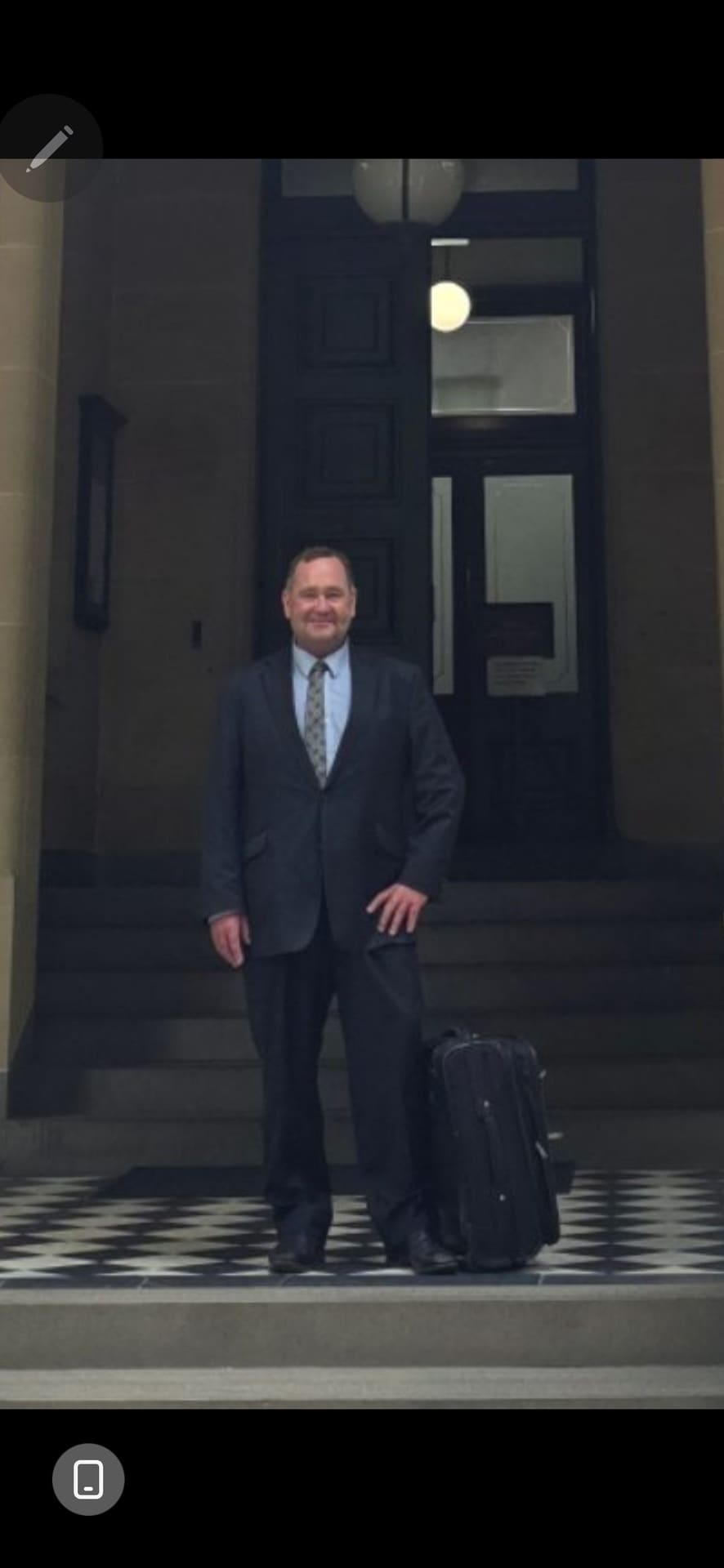
From Local Court mentions to serious District Court trials, preparation is everything.
An AVO is an Apprehended Violence Order. An ADVO is an Apprehended Domestic Violence Order, a specific type of AVO that applies where the defendant and the protected person are in a domestic relationship.
The conditions and court processes are similar, but ADVOs have additional consequences including potential effects on firearms licences and employment in certain sectors.
The first appearance is usually a mention date at the Local Court. The magistrate notes the charge, the plea is not formally entered, and the matter is adjourned for the defendant to get legal advice and for the prosecution to provide the brief of evidence.
No final hearing happens at this stage. Tony can appear with you on the mention date.
Representation is not mandatory at Local Court, but it makes a significant difference in how the matter is prepared and presented. Tony handles matters in all South Coast Local Courts and can advise you on the approach that suits your charge, your record, and your circumstances.
It depends on the offence, the sentence, and your occupation. Some convictions become spent after a crime-free period under NSW spent convictions law, meaning you are not required to disclose them in most circumstances.
Certain occupations, including police, teaching, and healthcare, require disclosure regardless. Tony can advise on what the specific charge means for your situation.
A section 10 dismissal (under the Crimes (Sentencing Procedure) Act 1999 NSW) is an order where a court finds you guilty of an offence but does not record a conviction. The charge is dismissed, or you are placed on a bond, without a conviction appearing on your criminal record.
It is available for eligible offences where the court considers it appropriate given your character, record, and circumstances. It is not available for every charge and is not automatic.
Get advice now
Call +61 2 6492 4035 for a confidential first consultation. Tony appears at all South Coast courts and can advise on your options.
Or call directly on +61 2 6492 4035